
Call us now :08045804265
 Send Inquiry
 Send Inquiry
Rainwater Harvesting System
Price 65000-1500000 INR/ Unit
MOQ : 1 Unit
Rainwater Harvesting System Specification
- Application
- Water Conservation
- Surface Area Requirement
- Variable (depends on design)
- Installation Type
- Above Ground / Underground
- Automation Grade
- Manual
- Type
- Rainwater Harvesting System
- System Lifespan
- 10-15 years
- Filtration Stages
- Multi-stage pre-filtration with sand and carbon
- Material
- Polypropylene (PP)
- Suitable For
- Residential, commercial, and industrial use
- Inlet/Outlet Size
- 2-4 inches (customizable)
- Storage Capacity
- 1000-10000 liters (customizable)
Rainwater Harvesting System Trade Information
- Minimum Order Quantity
- 1 Unit
- Supply Ability
- 5 Units Per Month
- Delivery Time
- 1 Months
About Rainwater Harvesting System
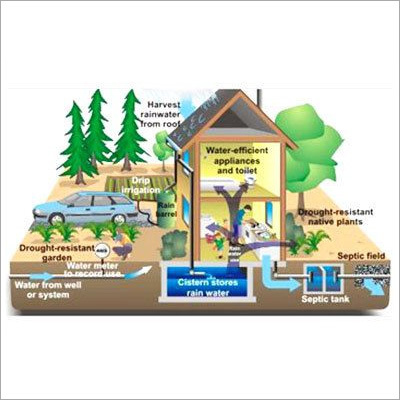
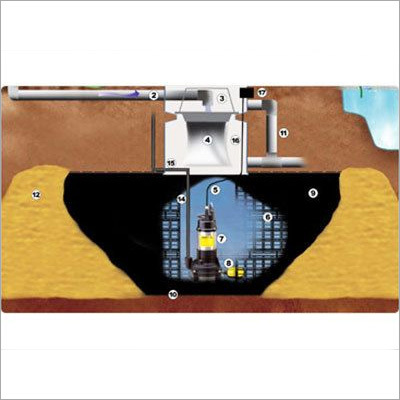
Based in Ludhiana, Punjab, we are a reputed and well established firm engaged in manufacturing and installation of Rainwater Harvesting System. We render our services for various commercial and industrial establishments to harvest rainwater that further can be used for landscaping, in home use, livestock, fire protection and agriculture. We offer Rainwater Harvesting System by keeping in mind the average rainfall in your city, total catchment area and other parameters. Moreover, we have a team of civil workers and plumbers to undertake maintenance and repair work of these systems.
Specification
| Installation Service | Yes |
Features:
- Timely completion of projects
- Complete transparency at every stage
- Flexible payment mode
Specification
- Area of the plot = 400000
- sq ft Height of rainfall = 2-9 (33 inches)
- Volume of rainfall = Area of plot X Height of rainfall
- Soak pit capacity proximate = 1,08000 ltr. Per 12 Hour
- Assuming that only 60% of the total rainfall is effectively harvested, volume of water harvested = 1,32,000 liters
Customizable Storage Solutions
Adaptable to different needs, this rainwater harvesting system offers storage capacities from 1,000 up to 10,000 liters. Whether for a small household or a large industrial structure, the system design can be tailored for both above and underground installations. The variable surface area requirement ensures flexibility for a wide range of site conditions.
Advanced Multi-Stage Filtration
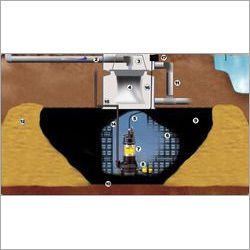
Our system employs a robust pre-filtration process using both sand and carbon filters. Sand filtration removes larger particles and debris, while carbon filtration improves water clarity and reduces odors. This ensures that harvested water is clean and suitable for multiple non-potable uses, supporting ongoing water conservation.
Durable and Long-Lasting Design
Built from high-quality polypropylene (PP), this system is resistant to corrosion and environmental impacts. With a manual automation grade, it is straightforward to operate and maintain. Designed for longevity, the expected lifespan ranges from 10 to 15 years, making it a cost-effective investment for sustainable water management in India.
FAQs of Rainwater Harvesting System:
Q: How is the rainwater harvesting system installed and what options are available?
A: The system can be installed either above ground or underground, depending on your site conditions and preferences. Our team evaluates the available surface area and customizes the installation to fit residential, commercial, or industrial spaces.Q: What process does the system use for filtering rainwater?
A: The rainwater passes through a multi-stage pre-filtration process involving sand and carbon. The sand filter removes large debris and particles, while the carbon filter enhances water quality by reducing odors and improving clarity.Q: When is the ideal time to install a rainwater harvesting system?
A: It is recommended to install the system before or during the onset of the rainy season to maximize water collection efficiency. However, installation can be carried out at any time, provided proper site preparation is done.Q: Where can this rainwater harvesting system be used?
A: This system is highly versatile and is suitable for residential buildings, commercial complexes, and industrial facilities across India. Its customizable design allows it to cater to a wide variety of water conservation needs.Q: What are the main benefits of using this system?
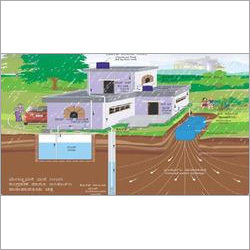
A: The primary benefits include substantial water conservation, reduction in dependency on municipal supply, and lowered utility costs. The system also aids in sustainable groundwater recharge and offers a durable, maintenance-friendly solution.Q: How is the stored water typically used?
A: Harvested rainwater can be utilized for non-potable applications such as gardening, landscape irrigation, toilet flushing, and industrial processes, helping reduce overall fresh water consumption.Q: What is the expected lifespan and maintenance requirement of the system?
A: The polypropylene construction ensures a long lifespan of 10-15 years. Routine maintenance primarily involves periodic cleaning of the filtration stages and ensuring that no blockages occur in the inlets or outlets.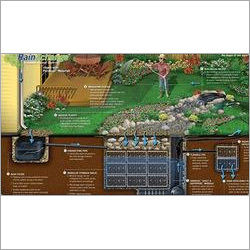
Tell us about your requirement

Price:
Quantity
Select Unit
- 50
- 100
- 200
- 250
- 500
- 1000+
Additional detail
Mobile number
Email

More Products in Rainwater Harvesting System Category

"We are only dealing in Punjab, Haryana, Himachal Pradesh, Uttar Pradesh "
 Send Inquiry
Our Products

St. No. 3, Mukhtiyar Nagar, Nr. Radha Swami Satsang Ghar, B. S. Chowk, Lohara, Ludhiana - 151211, Punjab, India

 Send Inquiry
 Send SMS
Developed and Managed by Infocom Network Private Limited.
